The BRC standard, developed in the UK, is a comprehensive food safety assurance system, particularly important for suppliers of private labels to British retail chains. Evolving since its first publication in 1998, this standard integrates the requirements of ISO 9000, HACCP, and GMP/GHP, offering precise guidelines. Its goal is to guarantee consistent product quality and safety through rigorous requirements that minimize the risk of misinterpretation.
BRC Audit: What is it?
BRC is a global safety standard essential for cooperating with retail chains. It combines the requirements of ISO 9000, HACCP, GMP, and GHP, guaranteeing high safety and product quality.
There are three main BRC certificates:

BRC FOOD: For food manufacturers.
BRC IOP: For packaging manufacturers.
BRC CP: For manufacturers of consumer products not directly related to food.
In an era where consumer trust in product quality and safety is the foundation of success, BRC certification is becoming a key benchmark. It is not just a seal of approval for compliance with rigorous requirements, but above all, a testament to a company’s commitment to continuous improvement and transparency.
BRC audits, especially unannounced ones, have become essential in the food and related industries. This is due to GFSI (Global Food Safety Initiative) requirements, which mandate at least one such audit every three years. This allows for the verification of safety systems in real-world operation, assessment of the food safety culture within the organization, and increased customer confidence. Audits also play a vital role in maintaining the certification required by retail chains, ultimately guaranteeing the highest standards of safety and quality.
BRC Audit Standards
The BRC audit covers the following standards:
Food Safety: Regarding the production, processing, or packaging of food and ingredients.
Packaging and Packaging Materials: Covering the production of all types of packaging.
Storage and Distribution: Aimed at companies providing storage and/or distribution services for pre-packaged products.
Consumer Products: Regarding the production, assembly, and contract packaging of all consumer products.
Agents and Brokers: Intended for trading entities that are not manufacturers in the food and packaging industries.
Retail: For entities in the food retail sector.
Key Elements of a BRC Audit
A BRC audit is a comprehensive assessment aimed at ensuring high standards of safety and quality. Here are the key elements taken into account:

HACCP System (Hazard Analysis and Critical Control Points): Implemented according to the seven principles of the Codex Alimentarius, ensuring systematic identification and control of hazards.
Quality Management System: A documented system where all elements are clearly defined, and operational data is available in writing.
Production Environment: Ensuring proper production conditions, including the implementation of GMP (Good Manufacturing Practice) and GHP (Good Hygiene Practice). This includes control of material and people flow, building condition, cleanliness, and pest control.
Product Control: Includes laboratory testing of raw materials and products, as well as control of packaging, expiration dates, stock rotation, and protection against contamination.
Process Control: Monitoring key process parameters such as time and temperature, and oversight of monitoring and measuring equipment.
Personnel Requirements: Checking whether staff adhere to hygiene rules, whether medical examinations are conducted, and whether employees are properly trained.
BRC Audit in Practice: Food Industry Examples
The control system for organic farming products in Poland is based on certification conducted by bodies authorized by the Minister of Agriculture. These bodies must be accredited by the Polish Centre for Accreditation (PCA), confirming their competence. Oversight is provided by the PCA and the Agricultural and Food Quality Inspection (IJHARiS).
Certification involves an assessment of the production process and, if necessary, laboratory test results. A positive decision leads to a contract and a certificate valid for 12–18 months, during which the certification body maintains continuous supervision.
5 Key Points Regarding a BRC Audit:
Accreditation and Oversight: Certification bodies must have PCA accreditation, and their work is supervised by various inspections.
Production Process Assessment: The audit focuses on evaluating the production process, not just testing finished products.
Certificate of Conformity: A positive audit result leads to the issuance of a certificate of conformity for a specific period.
Continuous Supervision: During the certificate’s validity, the certification body exercises continuous supervision through inspections, complaint analysis, and testing.
Report Analysis: Analyzing control documentation is a very important element for an objective assessment.
Tools for BRC Audits: The auditomat® System
auditomat® is a system that supports and automates audit processes, which is particularly useful for the rigorous BRC standards. It offers features that streamline audits:
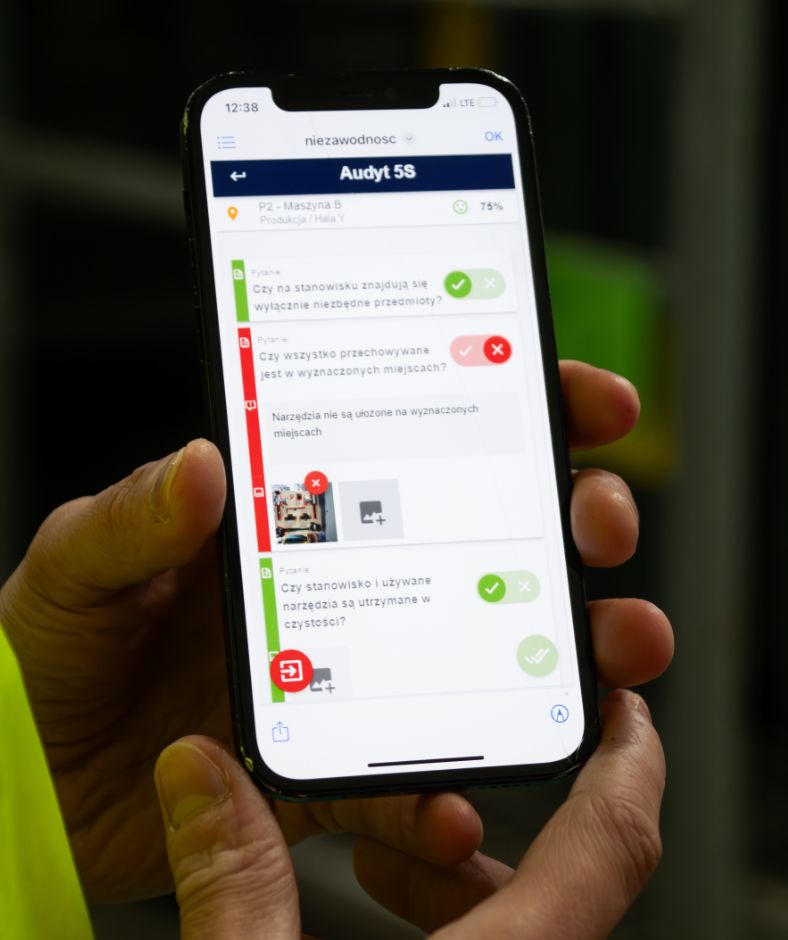
Flexible audit list creator: Allowing for personalized checklists.
Various question types: Ensuring comprehensive data collection.
Question grouping and audit path support: Facilitating organization and results analysis.
Photo and QR code support: Enabling documentation of audited areas.
Automatically generated PDF reports: Saving time and ensuring document consistency.
Summary
A BRC audit is not just a formality, but a key element in ensuring safety and quality in the food and related industries. Its comprehensive nature covers both management systems and practical production aspects, making it an indispensable tool in the pursuit of excellence.
Ensure the safety and quality of your products! Contact us to learn more about BRC audits. Streamline your BRC audit process with auditomat®! Try our innovative tool now.
This page could be better. Please enable JavaScript in your browser.
Manage consent
To provide you with the best possible experience, we use technologies, such as cookies, to store and/or access information about your device. Consenting to these technologies will allow us to process data, such as browsing behavior or unique identifiers on this site. Failure to consent or withdrawal of consent may adversely affect certain features and functions.
Functional
Always active
Storage of or access to technical data is strictly necessary for the legitimate purpose of enabling the use of a specific service expressly requested by the subscriber or user, or for the sole purpose of carrying out the transmission of a message over an electronic communications network.
Preferences
Storage or technical access is necessary for the legitimate purpose of storing preferences that are not requested by the subscriber or user.
Statistics
Technical storage or access that is used exclusively for statistical purposes.Technical storage or access that is used solely for anonymous statistical purposes. Without a subpoena, voluntary compliance from the ISP, or additional records from a third party, information stored or retrieved solely for this purpose usually cannot be used to identify you.
Marketing
Storage or technical access is required to create user profiles for the purpose of sending advertisements or tracking a user on a website or on several websites for similar marketing purposes.
To provide you with the best possible experience, we use technologies, such as cookies, to store and/or access information about your device. Consenting to these technologies will allow us to process data, such as browsing behavior or unique identifiers on this site. Failure to consent or withdrawal of consent may adversely affect certain features and functions.
Functional
Always active
Storage of or access to technical data is strictly necessary for the legitimate purpose of enabling the use of a specific service expressly requested by the subscriber or user, or for the sole purpose of carrying out the transmission of a message over an electronic communications network.
Preferences
Storage or technical access is necessary for the legitimate purpose of storing preferences that are not requested by the subscriber or user.
Statistics
Technical storage or access that is used exclusively for statistical purposes.Technical storage or access that is used solely for anonymous statistical purposes. Without a subpoena, voluntary compliance from the ISP, or additional records from a third party, information stored or retrieved solely for this purpose usually cannot be used to identify you.
Marketing
Storage or technical access is required to create user profiles for the purpose of sending advertisements or tracking a user on a website or on several websites for similar marketing purposes.